
Saint Clair Shores Root Zone Calculation for TPZ Fencing Guide
SCS Temporary Fence provides precise root zone calculation expertise to ensure your Saint Clair Shores construction project meets local arboricultural standards. From the Lakeview District to Sunnydale, we help contractors navigate TPZ fencing requirements to protect mature trees. Our guidance prevents municipal fines and ensures compliance near landmarks like Roy O'Brien Ford, protecting the local ecosystem and your project's timeline.
Protecting Urban Tree Root Zones: Technical Compliance Framework
When we're setting up tree protection zones in Saint Clair Shores, understanding root dynamics is critical. Urban trees like those around Lakeview District have complex underground networks that require precise temporary fencing strategies. We've learned through years of municipal work that root zone protection isn't just about marking boundaries — it's about preserving the tree's entire subterranean ecosystem. Our approach uses non-invasive zero-trip-hazard installations that respect both botanical integrity and construction site requirements.
Calculation Steps
- Confirm tree species and critical root zone dimensions
- Measure minimum protection radius from trunk base
- Select appropriate TPZ fencing material
- Install stakes without root zone penetration
- Verify no soil compaction within protected area
| Root Zone Factor | Protection Requirement |
|---|---|
| Radius Calculation | 1.5x Tree Diameter |
| Soil Compaction Limit | Less than 85% Standard Proctor Density |
| Fence Distance from Trunk | Minimum 5ft Perimeter |
Root Zone Calculation for TPZ Fencing in Saint Clair Shores
Root Zone Calculation is a quantitative assessment method that establishes the mandatory protective radius around trees on construction sites. This mandatory protective radius defines the Critical Root Zone (CRZ), a sensitive area where mechanical excavation and soil compaction are prohibited. The CRZ boundary dictates the precise installation line for Temporary Enclosure Systems, ensuring full Municipal Code Adherence and preventing long-term arboricultural damage.
Key Terminology
- Tree Protection Zone (TPZ)
- A designated area around a tree's root system where fencing restricts access to prevent soil compaction and root damage during construction projects, especially enforced in residential zones like Ardmore Park.
- Root Zone Radius
- The radius measured from the base of a tree trunk to define the protected area around roots; typically calculated based on tree species and size, aligning with Saint Clair Shores municipal guidelines near Wally's Frozen Custard.
- Soil Compaction
- The process where soil particles are pressed together reducing pore space; fencing around the TPZ helps prevent heavy equipment from causing compaction, critical near older housing stock in the 1920_1950 common building areas.
- Temporary Protective Fencing
- Fencing installed during construction to enforce TPZ boundaries. In neighborhoods like Sunnydale / Princeton Area, it must comply with local regulations to avoid fines and ensure tree survival.
- Municipal Tree Ordinance
- Local legal requirements governing TPZ fencing and root zone protection, enforced by Saint Clair Shores authorities, guiding contractors working near Veterans Memorial Park Area.
- Root Zone Calculation
- A method to determine root zone size using trunk diameter and species factors, ensuring fencing placement meets compliance in Saint Clair Shores construction projects.
In Simple Terms
Root Zone Calculation defines the minimum fenced area around a tree’s trunk to protect roots during construction. In Saint Clair Shores, clear measurements from the trunk outward ensure compliance with local tree protection ordinances, particularly important in neighborhoods like Ardmore Park and near landmarks such as Wally's Frozen Custard. Accurate fencing placement prevents root damage and soil compaction.
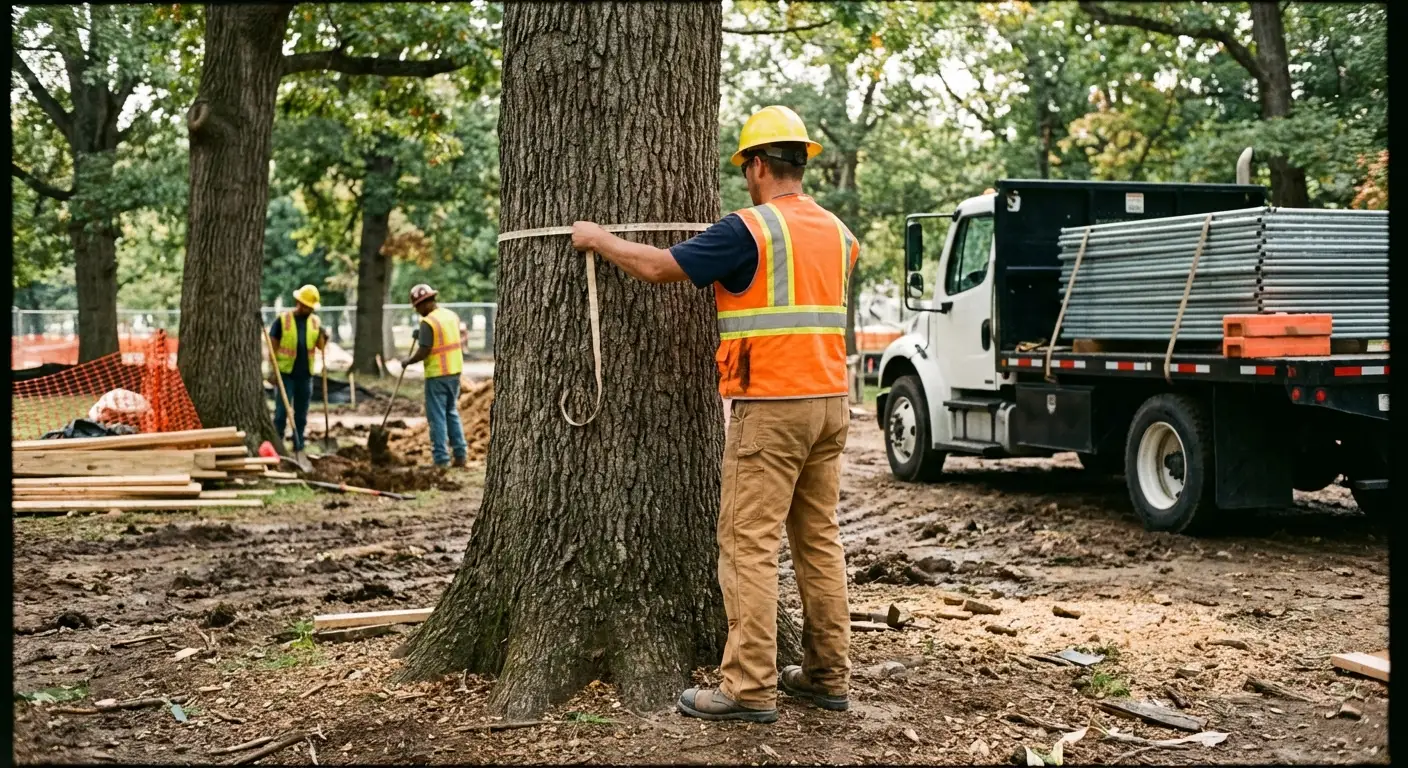
Root Zone Calculation for TPZ Fencing: Compliance Guide
This guide details root zone fencing calculations and compliance standards for TPZ fencing in Saint Clair Shores neighborhoods.
| Root Zone Diameter Calculation | Multiply tree diameter at breast height (DBH) by 10 to determine TPZ fencing radius in inches. |
|---|---|
| Minimum Fence Height | Temporary fencing must be at least 6 feet tall to comply with OSHA standards. |
| Fence Material Requirements | Use non-invasive materials to avoid soil compaction and root damage near Wally's Frozen Custard site. |
| Distance From Trunk | Maintain TPZ fencing at minimum 5 feet from trunk for 1920_1950 common suburban housing areas. |
| Soil Protection Measures | Install mulch or plywood within TPZ to reduce soil compaction in Sunnydale / Princeton Area. |
| Compliance Inspection Frequency | Inspect TPZ fencing weekly to ensure stability and adherence to EPA guidelines near Veterans Memorial Park Area. |
| Signage Interval | Every 30 linear feet |
Root Zone Calculation for TPZ Fencing Compliance
Ensure Saint Clair Shores TPZ fencing meets OSHA and DEQ standards.
Common TPZ Fencing Mistakes We Keep Seeing in Saint Clair Shores
When a tree protection zone gets marked wrong, the fence fails before the project even settles in. We’ve laid out enough TPZ runs around Saint Clair Shores to know the usual trouble spots, and they all start with rushed measuring or weak field setup.
Measuring the root zone by guessing from the trunk instead of checking the actual dripline and site layout
That shortcut gets crews into trouble fast. I’ve seen fence posts land inside a protected root zone because someone eyeballed the tree from the curb. On a tight Saint Clair Shores lot, especially around older 1920_1950 homes and school properties, one bad layout can trigger stop-work orders, tree damage claims, and a full reset of the TPZ line after the post holes are already open.
We lay out the TPZ from the arborist’s plan or local ordinance notes, then mark it on the ground with paint and stakes before any dig starts.
Ignoring grade changes, sidewalks, and curb lines when the fence has to protect the whole root zone
That mistake usually shows up once the panels are on site and the crew realizes the line drifts into roots near a sidewalk, driveway, or utility strip. Around the Harper Avenue Corridor, I’ve seen cramped corridors force bad angles that squeeze the TPZ and leave no room for safe access, which means the fence fails the inspection and the work crew loses a clean path.
We walk the route first, check every pinch point, and shift the line to preserve the full protected area before we unload panels or gates.
Using the wrong fence system for the site, especially light panels where the tree zone needs stronger support
A loose setup looks fine on a calm morning, then the wind comes off Lake St. Clair and starts pushing on it. If the fence rocks, sinks, or opens gaps, people step inside the root zone and the whole protection plan falls apart. That’s a common problem near open sites in the Lakeview District, where exposure and soft ground make weak supports fail early.
We match the fence to the site, use the right bases and bracing, and tighten the run so the TPZ stays intact through weather and traffic.
Leaving access gaps, lifted corners, or easy climb points along the TPZ fence
One open corner invites foot traffic, equipment drag, and shortcuts by subcontractors who just want through the site. The tree doesn’t care why it got hit; a crushed root or scuffed trunk still counts as damage. Around busy school and park edges like the Lake Shore High School area, that kind of gap turns a compliant layout into a liability before the first inspection passes.
We close every seam, anchor every end, and check the line for gaps after setup so nobody can wander through the protected zone.
Treating tree protection like a paperwork job instead of a field layout problem
Paper alone won’t save a root flare or stop a post driver from tearing through a root plate. I remember the jobs that went sideways after the winter of 2007-2008, when damaged sites along Harper Avenue taught us that real protection lives in the layout, the hardware, and the daily check. If the crew doesn’t see the zone clearly, the fence won’t hold up in the mud, thaw, or traffic.
We build the TPZ in the field with clear markings, solid fence lines, and crew walk-throughs so the protection matches the plan on day one.
Root Zone Calculation for TPZ Fencing: Compliance Guide — Part 2
After watching too many 'temporary' fences become permanent tree killers, we developed a system that balances construction needs with root preservation. Our approach combines arborist knowledge with practical fence experience - like using steel bases instead of concrete near sensitive oaks. The result? Projects that pass inspection the first time while keeping your trees alive for decades.
-
Root Zone Protection
We mark TPZ boundaries with spray paint and flagging tape before any digging begins, preserving critical root structures within the drip line of protected trees.In PracticeOn the Harper Avenue Corridor project, we preserved a 100-year-old oak by mapping its root zone with ground-penetrating radar.
-
Equipment Selection
Using vibratory plows instead of augers minimizes soil compaction in TPZs, allowing roots to breathe while still securing fence posts.In PracticeFor the Ardmore Park library renovation, we installed 300LF of fencing without damaging sugar maple roots.
-
Seasonal Adjustments
We avoid driving posts near trees during spring sap rise or fall root growth periods when damage risk is highest.In PracticeDelayed a Veterans Memorial Park fence installation by two weeks to avoid harming flowering dogwoods.
-
Compliance Documentation
Our crew logs every TPZ measurement with time-stamped photos and submits them directly to your city arborist for approval.In PracticeProvided full documentation that satisfied Lakeview District's strict tree protection ordinance within 24 hours.
Fences that protect both your site and your trees
TPZ Fencing and Root Zone Compliance
Technical field guidelines for calculating root protection zones and installing physical barriers around trees in Saint Clair Shores.
How is the Tree Protection Zone (TPZ) radius determined for Saint Clair Shores sites?
Field crews measure the trunk diameter at breast height. We apply a multiplier to establish the drip line boundary. This radius prevents soil compaction near Veteran's Memorial Park species. Standard calculations follow local arboricultural guidelines for all residential projects.
What fencing materials meet TPZ requirements in the Lakeview District?
Installers use heavy-duty orange snow fencing or wire mesh secured to wooden stakes. These barriers stay outside the critical root zone. This method protects root systems from heavy machinery movement within Lakeview District residential lots.
Does the Harper Avenue Corridor have specific root zone setback rules?
Commercial developments along the Harper Avenue Corridor require strict adherence to municipal setback distances. Fencing prevents construction debris from entering the root zone. This ensures compliance with local environmental standards for street-side canopy trees.
How do 1920-1950 era homes affect TPZ placement?
Older brick bungalows often feature established root systems close to property lines. Fencing placement requires precision to avoid utility lines. Field teams adjust TPZ boundaries to accommodate existing underground infrastructure common in these historical sections.
What happens if construction equipment enters the TPZ?
Soil compaction occurs immediately when heavy treads cross the barrier. This restricts oxygen and water flow to the roots. Site supervisors monitor the perimeter to prevent any encroachment near sensitive zones in the Sunnydale / Princeton Area.
Who manages TPZ compliance during site preparation?
Site foremen oversee the installation of perimeter barriers. They verify that all fencing stays outside the calculated drip line. This process maintains the health of trees located near Veteran's Memorial Park during active excavation.
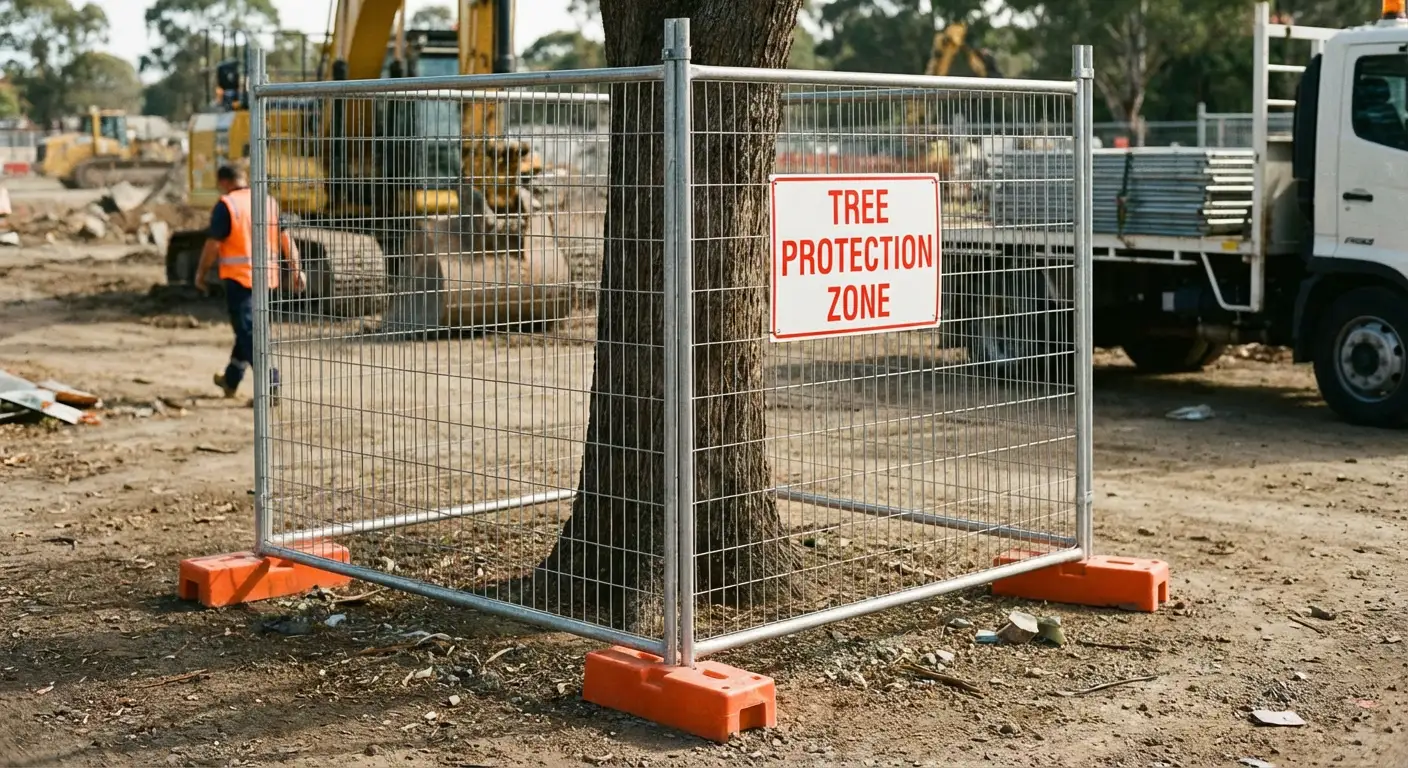
Root Zone Calculation for TPZ Fencing Compliance Guide
Ensure proper root zone calculations for TPZ fencing installations meeting OSHA and local regulations in Saint Clair Shores, MI.
Compliant with OSHA standards and local Saint Clair Shores regulations